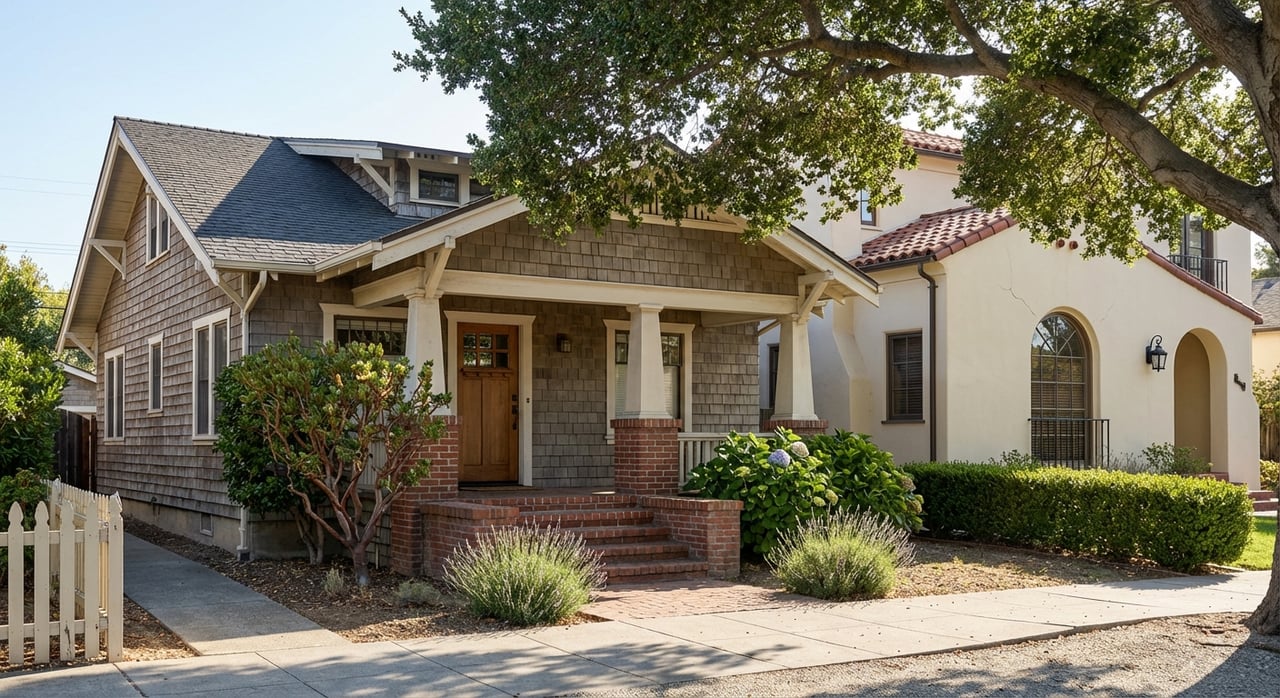
Love the character homes on Alameda’s Bronze Coast but not sure what “Craftsman details” or “Mediterranean lines” really mean for your lifestyle, budget, and maintenance list? You are not alone. When you understand the local architecture, you can read listings faster, ask better questions on showings, and plan upgrades with confidence. This guide gives you style hallmarks, buyer cues, renovation tips, and Alameda-specific rules to know. Let’s dive in.
Bronze Coast at a glance
Set in central Alameda near Park Street and the lagoons, the Bronze Coast is a residential pocket known for older single-family homes with rich detail and walkable appeal. You will see a mix of Victorians, Arts and Crafts bungalows, and 1920s–1930s revival styles. The city has a deep stock of pre-1930 buildings, and it maintains strong preservation programs that can shape exterior work and demolitions. You can review the city’s Historic Preservation Ordinance and processes on the City of Alameda’s Historic Preservation page.
- Learn about local preservation programs and review procedures on the City’s Historic Preservation page. The city notes over 10,000 structures built before 1930. City of Alameda Historic Preservation
- For style definitions and local examples, see the City’s architecture survey and the Alameda Architectural Preservation Society. City architecture survey PDF | AAPS
Key home styles you’ll see
Craftsman and bungalows (c. 1905–1930)
Compact, efficient homes with personality. Look for low-pitched gabled roofs, wide eaves with exposed rafters, and tapered porch columns on masonry piers. Interiors often include built-ins like bookcases, window seats, and box-beam dining ceilings.
- Buyer cues: “built-ins,” “exposed beams,” “box-beam ceiling,” “bungalow,” or “Craftsman details.”
- Renovation and upkeep: Original wood siding and trim need steady paint care. Early examples may have knob-and-tube wiring and little wall insulation. Pier-and-beam foundations are common, which are good candidates for seismic bolt-and-brace upgrades.
Queen Anne and Victorian (c. 1880s–1910s)
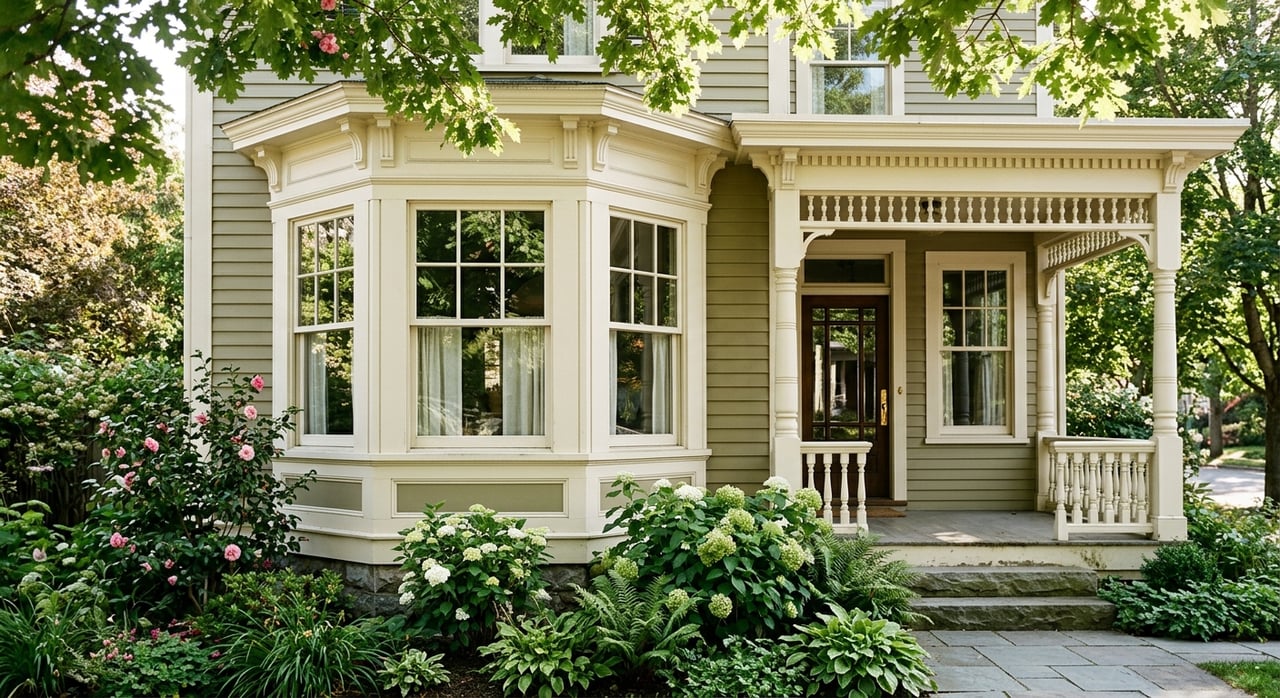
Statement homes with asymmetrical façades, turrets or towers, bay windows, and decorative millwork. Expect tall ceilings, formal rooms, and stairs. Kitchens are often small unless remodeled.
- Buyer cues: “turret,” “bay window,” “gingerbread,” “ornate millwork,” or “parlor.”
- Renovation and upkeep: Exterior trim and windows can be costly to restore. Complex rooflines increase repair costs. Plan for lead paint safety, potential older wiring, and careful structural planning if you want to open the layout.
Mediterranean and Spanish Colonial Revival (c. 1915–1940)
Smooth stucco walls, red clay barrel tile roofs, arched openings, and courtyards define this coastal favorite. Many homes feature indoor-outdoor flow and two-story massing.
- Buyer cues: “stucco,” “barrel tile,” “arched entry,” “wrought iron,” or “courtyard.”
- Renovation and upkeep: Watch for stucco cracking and flashing at roof-to-wall joints. Tile roofs are heavy and require experienced roofers. Near the shoreline, check for corrosion on metal details.
Edwardian, Colonial Revival, and Italianate (late 1800s–early 1900s)
These transitional styles show simpler ornament than high Victorian, with vertical proportions on Italianates and symmetrical fronts on Colonial Revival. They appear across mid-island streets.
- Buyer cues: “symmetrical façade,” “classical columns,” “tall narrow windows,” or “box bay.”
- Renovation and upkeep: Similar systems and plaster-wall issues as Victorians, often with more moderate exterior trim costs. Expect common upgrades like panel and plumbing improvements.
Cottages, false-fronts, and infill
You will also see modest workers’ cottages, former false-front commercial buildings converted to homes, and later infill like small postwar houses. They can offer good value on smaller footprints.
- Buyer cues: “cozy cottage,” “converted storefront,” “compact lot,” or “starter footprint.”
- Renovation and upkeep: Verify prior conversions and permits. Small homes can be efficient to update but may need creative storage and systems upgrades to modern standards.
What style means for living
Each style signals typical layouts and everyday flow. Bungalows favor efficient, informal plans with living and dining rooms connected and a real front porch presence. Victorians and Edwardians lean formal with multiple parlors and stairways that create privacy. Mediterranean Revival homes often frame courtyards for indoor-outdoor living.
If you want to open sightlines, Craftsman and many 1920s homes adapt well with planned beams and permits. Victorian conversions are possible but call for careful structural work and potential historic review. Preserving original windows and built-ins often protects long-term value.
Common issues to check on tours
Older Bronze Coast homes share a few recurring themes. Use this quick checklist as you preview listings and walk showings.
- Foundation and seismic: Many homes are raised on pier-and-beam or have cripple walls. These are strong candidates for bolt-and-brace retrofits. Ask sellers if work was done with permits and by whom. EBB grants can help eligible owners fund basic retrofits. Earthquake Brace + Bolt (verified Feb 2026)
- Roofs and attic: Complex Victorian roofs cost more to repair. Tile roofs are heavy and need experienced pros. Look for sagging, patching, or flashing repairs.
- Exterior cladding: Wood siding needs paint and local rot repairs. Stucco needs sound flashing and drainage to prevent hidden moisture damage.
- Electrical capacity: Older homes may have limited panels or legacy knob-and-tube. If you plan EV charging or an induction range, get panel size and age from the seller or inspector.
- Plumbing: Galvanized supply and cast-iron drains appear in very old houses. Budget for repiping if water flow is low or leaks are noted.
- Windows and insulation: Original single-pane wood windows add charm but lose heat. Sash repair plus storm or secondary glazing can preserve look and improve comfort. Attic insulation is usually a high-value upgrade.
- Lead paint and asbestos: Pre-1978 homes are likely to have lead-based paint. Follow EPA Renovation, Repair and Painting guidance for safe work and require certified contractors. EPA RRP basics
- Termites and wood pests: Expect a termite or WDO report. Review invoices and repair permits to confirm scope and timing.
- Moisture and salt air: Near bays and lagoons, check trim, decks, fasteners, and HVAC parts for rust or soft wood.
Rules, permits, and incentives
A little local prep goes a long way. Alameda has clear processes and useful incentives that can shape your plan and budget.
- Historic preservation: The city’s ordinance and Historical Advisory Board oversee work on designated resources and in historic districts. Exterior changes may require a Certificate of Approval in addition to a building permit. Check a property’s status early and keep records of past approvals. City Historic Preservation
- Seller disclosures: California sellers must deliver a Transfer Disclosure Statement and related statutory forms, including Natural Hazard Disclosures. Ask for these early and verify claims with inspections and permits. California Civil Code §1102
- Seismic retrofit grants: EBB offers grants typically up to $3,000 to help bolt and brace raised wood houses. Eligibility, ZIP codes, and registration windows vary by year. Check current status before budgeting. EBB program (verified Feb 2026)
- ADUs: California law and Alameda’s objective standards allow ADUs in many cases. If your target home is a bungalow or larger lot, confirm the latest size, setback, and parking rules, and whether historic compatibility applies. Alameda Planning Division
- Electrification rebates: Alameda Municipal Power posts rebates for heat pump water heaters, heat pump HVAC, and EV chargers. If you plan upgrades, check current terms and funding cycles. AMP rebates (verified Feb 2026)
- Flood and sea-level planning: Parts of Alameda are low-lying. Review FEMA flood zones and the city’s adaptation project records for your address to understand insurance needs and future improvements. FEMA Flood Map Service Center | Alameda adaptation projects
Renovation cost signals by style
Renovation costs vary by scope, contractor, and permitting, but style gives helpful clues. Victorians often carry higher exterior and roofing costs due to complexity and ornate trim. Craftsman bungalows usually sit in a midrange for kitchen and bath updates with manageable structural changes. Mediterranean homes commonly require skilled tile and stucco work that can be pricier than asphalt-and-wood exteriors. Foundation bolt-and-brace jobs can be relatively modest in scope, while full foundation replacements or soft-story corrections increase timelines and cost. EBB grants can offset a portion for eligible homes (verified Feb 2026).
Touring checklist for Alameda buyers
Take this list to your next showing and use it to guide your questions.
- Has the seller provided the Transfer Disclosure Statement and Natural Hazard Disclosure? If not, request them now. Civil Code §1102
- What is the roof age and material? Any permits or full replacement receipts in the past 10–15 years?
- What is the foundation type and have there been repairs or seismic upgrades? Were permits pulled?
- Any history of flooding, high-tide ponding, or sewer backups? Any related insurance claims?
- Termite and WDO reports on file? Are treatments recurring or are structural repairs recommended? Ask for invoices and permits.
- What is the electrical panel size and age? Any remaining knob-and-tube wiring?
- Any original plumbing or mechanicals that may need replacement?
- For pre-1978 homes, has the seller provided the lead paint pamphlet or test results? EPA RRP basics
- Is the home designated or contributing in a local historic district? If yes, ask about prior Certificates of Approval and any conditions. City Historic Preservation
- Any unpermitted work? Request records, plans, and permit finals to avoid surprises with lenders or insurers.
Ready to find your fit?
If you love the Bronze Coast’s mix of character and walkable charm, you deserve a guide who knows these homes at the street-by-street level. Our team helps you decode listing language, assess true renovation scope, and plan smart offers that account for style-specific costs and local rules. When you are ready to tour, we will line up inspectors, verify permits, and introduce trusted local pros so you can move forward with clarity.
Start your Bronze Coast search with the neighborhood experts at the Sophia Niu Group. We are local, bilingual, and here to advocate for you from the first showing to the keys.
FAQs
What defines Bronze Coast architecture in Alameda?
- The Bronze Coast features a mix of Victorians, Arts and Crafts bungalows, and 1920s–1930s revival styles such as Mediterranean and Colonial Revival, confirmed by the City’s architecture survey and local preservation groups.
How do historic rules affect exterior work in Alameda?
- Designated properties or contributing structures may need a Certificate of Approval in addition to building permits, so check historic status early and consult the City’s Historic Preservation resources.
What should I know about seismic retrofits on older homes?
- Many raised wood-frame homes can be bolted and braced to improve earthquake performance, and EBB grants typically up to $3,000 may help eligible owners fund basic work (verified Feb 2026).
Are Bronze Coast homes at flood or sea-level risk?
- Parts of Alameda are low-lying, so review your address on FEMA’s Flood Map Service Center and read the city’s adaptation project records to understand insurance and long-term resilience planning.
Can I add an ADU to a Bronze Coast property?
- California law and Alameda’s objective standards allow ADUs in many situations, but confirm current size, setback, parking, and any historic compatibility rules with the Planning Division before you design.