Just after 1:30 a.m. on September 17, Alameda firefighters pulled up to a two-story building near the western tip of the island and found it already fully engulfed, flames working through every window on both floors. Nobody was living there. Nobody had been for years. By the time crews got the fire knocked down using aerial ladders because the inside was too dangerous to enter, more than 31 firefighters, close to the entire Alameda Fire Department, had responded, and Oakland Fire Department had sent engines under mutual aid to help cover the rest of the city.
Here's the part that says more about this stretch of the West End than the fire itself: the outlets covering it couldn't agree on the address. The Alameda Post reported the building on the 2300 block of Sunrise Court. CBS News San Francisco and the San Francisco Chronicle placed it on Rainbow Court, near Sunrise. Four separate newsrooms covering the same overnight blaze landed on two different street names for the same building.
That's not a typo problem. It's a visibility problem, and it's the actual story here.
What Burned, and What Didn't
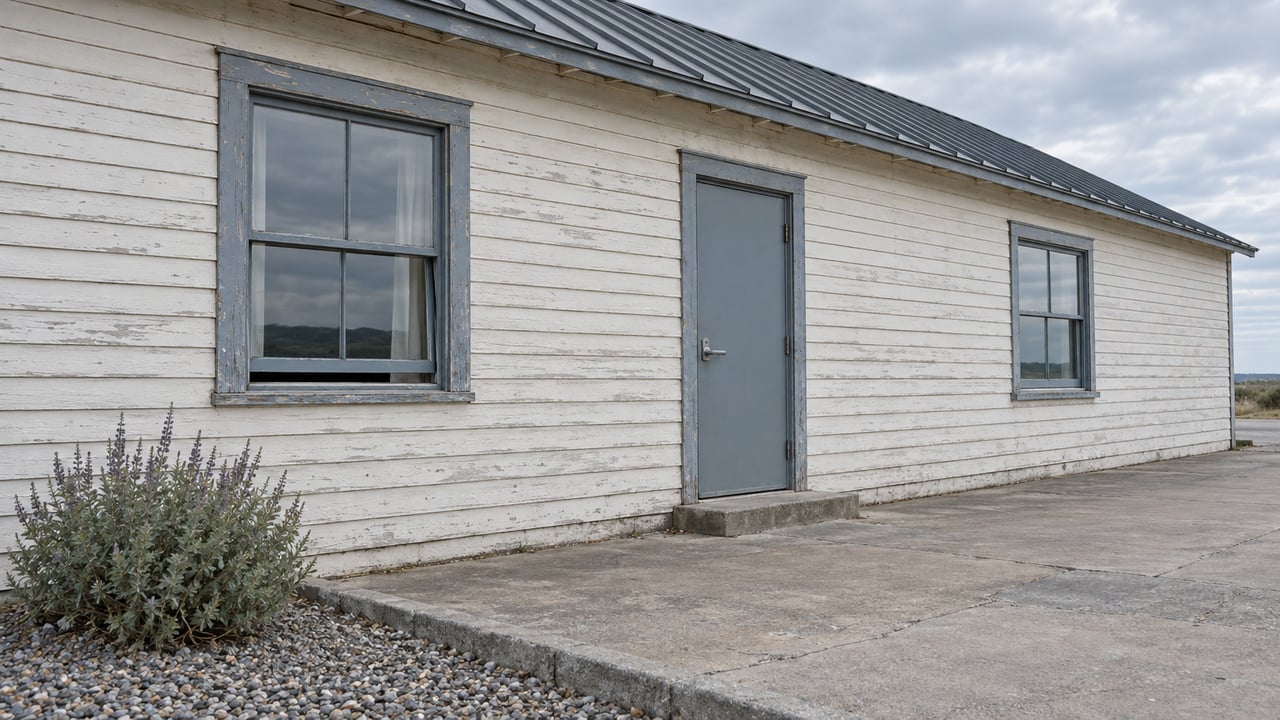
The building the Alameda Post identified as Building 78 was part of the former Naval Air Station Alameda. It went up as temporary barracks for enlisted men and was later converted, in 1943, to house the Navy's WAVES, the Women Accepted for Volunteer Emergency Service. Alameda Fire Department spokesperson Kevin Tidwell told the Post the structure had been vacant for years by the time it caught fire. Alameda County Sheriff's deputies searched the site after responders got word that an unhoused person known to sometimes shelter there might be inside. That person was located safely and the area was cleared. No injuries were reported. The cause is still under investigation.
Nearby residents were told to shelter in place while crews worked, according to reporting picked up through the Bay Area news wire. The building sits close enough to an occupied supportive housing complex, Dignity Commons, that fire officials had to keep the blaze from spreading to residential structures nearby. It's also a short walk from Almanac Brewing, one of the taprooms that anchors Spirits Alley, the cluster of breweries, distilleries, and wineries that now pulls weekend crowds into the old hangars a few blocks over.
That distance, a few blocks, is the whole point.
A Corner of the Point Still Waiting Its Turn
Alameda Point has spent the better part of three decades being described as a neighborhood in transition, and for good reason. Since the Navy closed the base in 1997, the city has slowly converted hangars into tasting rooms, turned barracks blocks into new apartments, and built out waterfront trails where runways used to be. Faction Brewing, St. George Spirits, Rock Wall Wine Company, and Hangar 1 now share the same repurposed Navy buildings that once served the Pacific Fleet. New residential communities like Aero and Leeward have gone up along the shoreline.
But that conversion has never happened all at once. It happens building by building, lease by lease, on whatever timeline federal cleanup rules and city funding allow. A base closure comes with a legal cleanup obligation before land can even be handed over for reuse, and Alameda Point has been working through that obligation in stages for almost 30 years. A city tour of the last remaining cleanup sites, reported by the Alameda Post at the start of September, put the Navy's land transfer at 92 percent complete, with roughly 217 acres still to be conveyed to the city in the years ahead. The last four contaminated sites were, as of that tour, the final items on the list before the rest of the base can be fully handed over.
Building 78 sat inside that gap. It wasn't part of the cleanup sites still pending federal sign-off, and it wasn't one of the structures that had made it onto anyone's adaptive-reuse list either. It was just there, a two-story WWII-era barracks a few streets back from the breweries and the new apartments, vacant long enough that reporters covering its fire couldn't confirm which street it actually fronted.
The Kind of Building That Doesn't Make the Tour
Alameda Point's public-facing story tends to run through Spirits Alley, the USS Hornet Museum, and the monthly Antiques Faire that draws upward of 800 dealer booths to the base's old runways every first Sunday. Those are the parts of the Point that get photographed, toured, and written up. They're also the parts that have already been claimed, leased, and reopened as something new.
Building 78 was never on that circuit. It wasn't a stop on a walking tour. It wasn't mentioned in any of the redevelopment updates that have tracked hangar conversions or new housing starts. Its most recent documented use, before this month, was as an occasional shelter for someone with nowhere else to go. Its most notable feature, as far as the public record shows, was a wartime footnote: one of the buildings that briefly housed some of the first women to serve in Navy uniform on this base.
That's the pattern worth sitting with. A neighborhood built out of adaptive reuse doesn't reuse everything at the same pace. Some buildings get a brewery. Some get a housing complex. Some just sit, decade after decade, until a fire department log is the only document that notices them, and even then the paperwork can't agree on the street.
What's Actually Changed, and What Hasn't
None of this means Alameda Point's reuse story is a myth. Almanac Brewing is real, occupied, and drawing customers most weekends. Dignity Commons is real, occupied, and close enough to Building 78 that its residents had to shelter in place while firefighters worked. The Antiques Faire really does bring in roughly 800 dealer booths on the first Sunday of every month. The base really has moved 92 percent of its land back into city hands.
What the fire adds to that picture is a reminder that the remaining eight percent, and the buildings sitting inside it, aren't evenly distributed or evenly visible. Some of what's left standing on this side of the island has been sitting untouched since before most of the current tasting rooms opened their doors. It doesn't show up on the tour maps because there's nothing scheduled to happen there yet. It just sits, until something like a 1:30 a.m. fire puts it briefly back on the record, this time as a location four different newsrooms couldn't quite pin down.
If you've been keeping an eye on how Alameda Point's older stock, the barracks blocks, the industrial leftovers, the buildings nobody's toured in years, fits alongside the parts that have already been reinvented, that's exactly the kind of block-by-block read Sophia Niu Group can walk through with you. Reach out if you want a clearer picture of what's actually happening on your stretch of the West End.